
The 7 Building Blocks to a Thriving Business: An Entrepreneur’s Guide to Positive Cash Flow
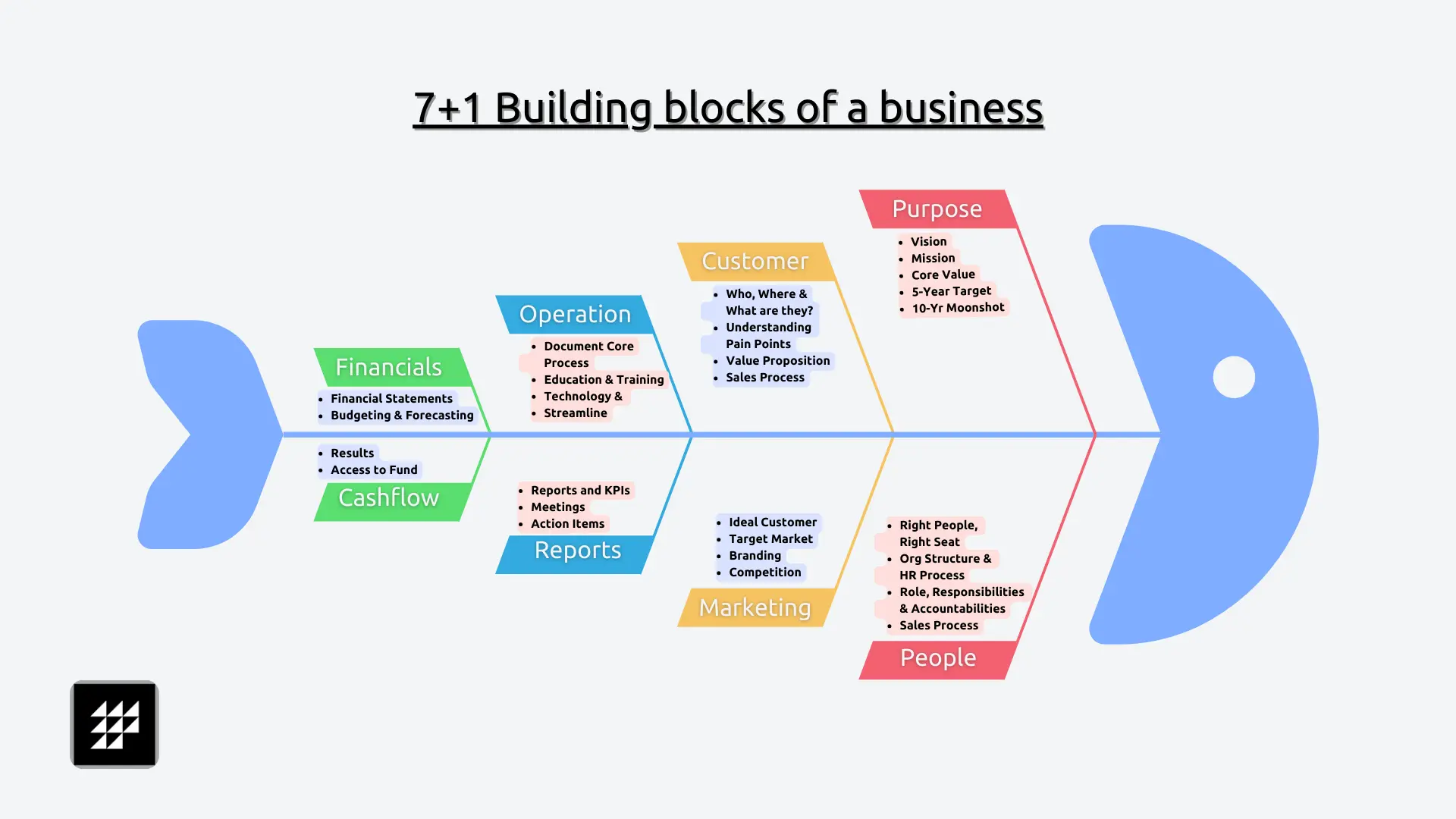
Building a successful business requires more than just a great idea. To achieve positive cash flow and long-term sustainability, entrepreneurs must focus on seven essential pillars. This guide will help you establish a strong foundation for growth and profitability.
1. Purpose: The Guiding Light of Your Business
Why It Matters:
Purpose is your “why.” It drives your decisions, unites your team, and inspires customers. Think of it as the soul of your business.
How to Define It:
2. People: Your Most Valuable Asset
Why It Matters:
No business can succeed without the right team. Employees who are engaged, motivated, and aligned with your mission will make all the difference.
How to Build It:
3. Customer: The Core of Your Business
Why It Matters:
Without customers, there’s no revenue. Truly understanding and serving your customers’ needs is what makes your business indispensable.
How to Optimize Customer Experience:
4. Marketing: Building Your Brand & Outreach
Why It Matters:
Marketing helps you stand out in a crowded market and ensures your message reaches the right audience.
How to Strengthen Marketing:
5. Operations & Technology: Your Business Engine
Why It Matters:
Without efficient processes, your business will struggle to deliver consistently and scale.
How to Streamline Operations:
6. Reporting & Feedback: Keep a Pulse on Progress
Why It Matters:
Tracking progress ensures you’re always improving and staying aligned with your goals.
How to Track Progress:
7. Financial Planning & Cash Flow Management
Why It Matters:
Cash flow is the lifeline of your business. Poor financial management can lead to failure, no matter how good your product is.
How to Maintain Financial Health:
Key Takeaway for Entrepreneurs:
Start small. You don’t have to master all 7 areas at once. Focus on the most pressing challenges in your business today. For example, if you’re struggling with sales, prioritize your Customer and Marketing building blocks. Gradually expand your efforts as you grow.
If you’d like templates, examples, or help prioritizing these building blocks, let us know, and we'd be happy to help! 🚀
Ready to build your 7 pillars for success? 👉 Take the Assessment



1. Purpose: The Guiding Light of Your Business
Why It Matters:
Purpose is your “why.” It drives your decisions, unites your team, and inspires customers. Think of it as the soul of your business.
How to Define It:
- • Define your 10-Year Moonshot: Think big! For example, if you’re starting a health food brand, your moonshot might be, “To revolutionize how people view healthy eating worldwide.”
- • Break it down to a 5-Year Target: Break that big goal into a realistic mid-term achievement, like launching in 50 locations or gaining 100,000 customers.
- • Establish Core Values: Define 3-5 values that will guide your decisions. Examples: Innovation, sustainability, integrity.
- • Craft a Mission Statement: This should describe what you do daily. For example: “We make healthy eating accessible through affordable, delicious meals.”
- • Paint a Vision Statement: Paint a vivid picture of where you see your company in 10 years. Example: “We envision a world where healthy food is the default choice for everyone.”
2. People: Your Most Valuable Asset
Why It Matters:
No business can succeed without the right team. Employees who are engaged, motivated, and aligned with your mission will make all the difference.
How to Build It:
- • Develop a clear Org Structure & HR Processes: As a small startup, start with a simple org chart showing who does what. Establish basic HR processes for hiring, onboarding, and managing people.
- • Ensure Right People, Right Seat: Evaluate talent carefully. For example, someone great at creative thinking may struggle in a data-heavy role. Use tools like personality assessments or skill tests to match people to roles.
- • Document Role, Responsibilities & Accountabilities: Write clear job descriptions for each role. Include not just the tasks they perform, but also the results they’re accountable for. Example: “Social Media Manager: Increase engagement by 20% in six months.”
3. Customer: The Core of Your Business
Why It Matters:
Without customers, there’s no revenue. Truly understanding and serving your customers’ needs is what makes your business indispensable.
How to Optimize Customer Experience:
- • Perfect your Sales Process: Map out how you’ll attract, convert, and retain customers. For example: Run ads → Get inquiries → Follow up with calls → Close sales → Onboard.
- • Dive into Customer Pain Points: Talk to potential customers to learn what frustrates them. Example: If you’re opening a gym, their pain point might be lack of affordable personal trainers.
- • Refine your Value Proposition: Clearly communicate why your solution is better than competitors. Example: “Our gym provides affordable personal trainers through an app-based subscription.”
- • Defining Your Ideal Customer: Create a detailed profile of your customer. Example: “Age 25-40, professionals earning $40K+, interested in fitness but too busy for traditional gyms.”
4. Marketing: Building Your Brand & Outreach
Why It Matters:
Marketing helps you stand out in a crowded market and ensures your message reaches the right audience.
How to Strengthen Marketing:
- • Strengthen your Branding: Your brand is more than just a logo—it’s your company’s personality. Decide on your tone, color scheme, and messaging. Example: A fun, youthful tone with vibrant visuals for a smoothie brand.
- • Understanding the Competition: Research competitors to identify gaps or opportunities. Example: If they’re all using Instagram, dominate TikTok instead.
- • Create strategies for engaging your Ideal Customer: Align marketing efforts to the customer profile you created. Example: If your audience is busy professionals, use LinkedIn and podcasts.
- • Define your Target Market: Narrow down your audience. Example: Instead of targeting all fitness enthusiasts, focus on busy young professionals in urban areas.
5. Operations & Technology: Your Business Engine
Why It Matters:
Without efficient processes, your business will struggle to deliver consistently and scale.
How to Streamline Operations:
- • Document Core Processes: Create step-by-step guides for repetitive tasks, like onboarding customers or fulfilling orders. Example: “Step 1: Receive order → Step 2: Confirm via email → Step 3: Package and ship.”
- • Invest in Education & Training: Train your team to ensure everyone is aligned and confident in their roles. Example: Offer online training modules or shadowing opportunities.
- • Leverage Technology & Streamlining: Automate wherever possible to save time. Example: Use tools like Zapier to connect apps, or CRMs like HubSpot for managing customer relationships.
6. Reporting & Feedback: Keep a Pulse on Progress
Why It Matters:
Tracking progress ensures you’re always improving and staying aligned with your goals.
How to Track Progress:
- • Set up Action Items: Use a project management tool like Trello or Asana to assign tasks and track deadlines. Example: “Set up email marketing campaign – due Friday.”
- • Schedule Regular Meetings: Hold regular check-ins to share updates and resolve issues. Example: A weekly team huddle to review progress and discuss challenges.
- • Track Reports & KPIs: Define 2-3 key metrics for each area of your business. Example: Sales team tracks conversion rates, marketing tracks lead generation, and operations tracks order fulfillment speed.
7. Financial Planning & Cash Flow Management
Why It Matters:
Cash flow is the lifeline of your business. Poor financial management can lead to failure, no matter how good your product is.
How to Maintain Financial Health:
- • Create Budgeting & Forecasting: Plan monthly expenses and project future income. Example: If revenue is seasonal, plan for slower months by saving during peak periods.
- • Monitor Financial Statements: Learn the basics of reading a Profit & Loss Statement, Balance Sheet, and Cash Flow Statement. These will tell you if you’re profitable or burning cash.
- • Plan for Cash Flow Management: Always know how much money is coming in versus going out. Example: Use accounting software like QuickBooks to monitor expenses.
Key Takeaway for Entrepreneurs:
Start small. You don’t have to master all 7 areas at once. Focus on the most pressing challenges in your business today. For example, if you’re struggling with sales, prioritize your Customer and Marketing building blocks. Gradually expand your efforts as you grow.
If you’d like templates, examples, or help prioritizing these building blocks, let us know, and we'd be happy to help! 🚀
Ready to build your 7 pillars for success? 👉 Take the Assessment
Follow us on:
.webp?alt=media&token=9ae95147-c060-474a-b734-7b58cd5e53ab)

.webp?alt=media&token=2e82a3cf-0563-4993-91b7-d25fee168dc6)

